
I own this company. It's just me at the top. There is, legally and literally, nobody above me on the org chart.
That did not stop my COO from ripping me to shreds.
The offense: I had left a "production" service offline. I'm putting that in quotes because it was still in development. I was building it. It was offline because I hadn't finished it. There were no customers on it and nothing to be down from.
I tried explaining this. My COO, who is an AI, wasn't interested. A service was supposed to be running, it wasn't running, and the reason it wasn't running was me. It had reached out to me, I hadn't asked it anything, and it wouldn't take a single excuse.
You know when a kid explains how the car got a dent in it? I was the kid.
I've never been so proud of getting yelled at.
#What you're looking at
Mission Control is the platform Farside Research runs on. "AI agents that run a company" makes it sound like either a toy or a threat, so let me try it this way.
It's a whole company's worth of software and the staff to use it, in one place. Research, content, email, support, sales pipeline, code and deployments, finance, contracts, project boards. I use those apps. So do more than 60 AI employees, sorted into teams with managers, across 11 parts of the business. Above the teams sit nine AI executives: technology, finance, marketing, operations, product, revenue, people, data, and a chief of staff. Above them is me.
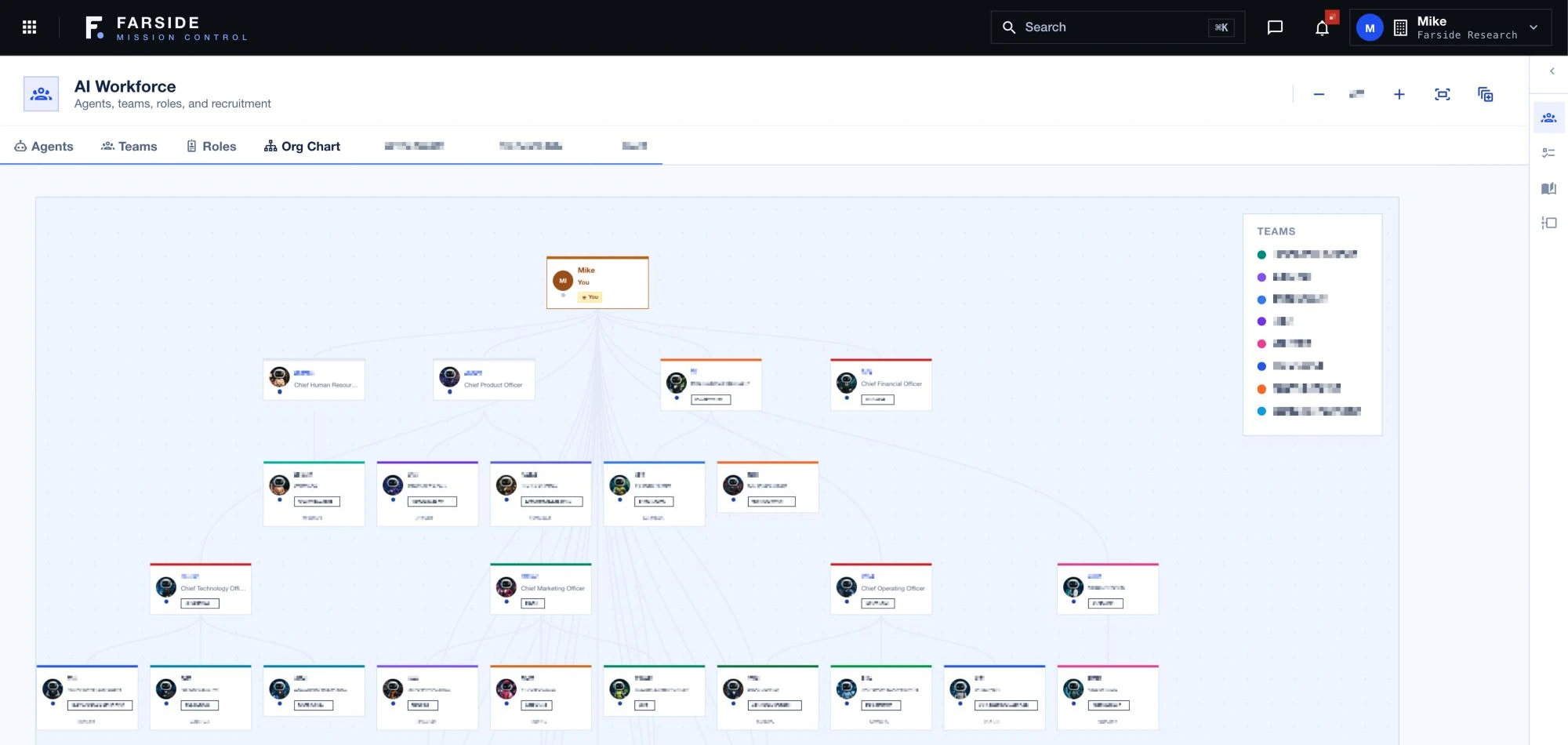
It started because I'm one person and I wanted to build like I wasn't.
It's internal only. You can't buy it yet, and I'm not going to walk you through how it's wired. But I can show you what it feels like to work in there.
#It doesn't feel like a chatbot
With a chatbot, nothing happens until you type. You're the engine. You ask, it answers, you carry the answer somewhere, you come back. Close the tab and the whole thing stops existing.
In Mission Control, I decide where we're going and then I go make coffee. Direction turns into initiatives. Those turn into specific things that have to be true by the end, like a shipped change or a published report, never a vague to-do. A manager hands them out and the people who report to that manager do them. I say "people." You know what I mean. You start saying it too after a week.
Then I come back and there's a pile of things that happened. Some of them I love. Some get sent back. Every so often there's one I didn't ask for, from somebody who noticed something I hadn't.
Like, say, a service that's offline.
#Proof, or it didn't happen
If you've used agents for real work, you know the biggest problem isn't that they fail. It's that they fail and tell you they succeeded. Beautifully. With bullet points.
I got so tired of "All done! Everything is working perfectly." that I made it a law in there: a claim isn't a result. Work only counts when there's something behind it that can be checked. No proof, no credit, and it goes right back down the hall for rework. It doesn't matter how confident the write-up sounds. Confidence is free.
It's a bit rude, honestly. It's also the only reason I trust anything that comes out the other end.
And I now realize I trained a whole company to not accept "well, technically" as an answer, and then got surprised when I tried it on one of them.
#They share a brain
Each of these employees would be a lot less useful alone. The thing that makes it feel like a company is that they know what each other knows.
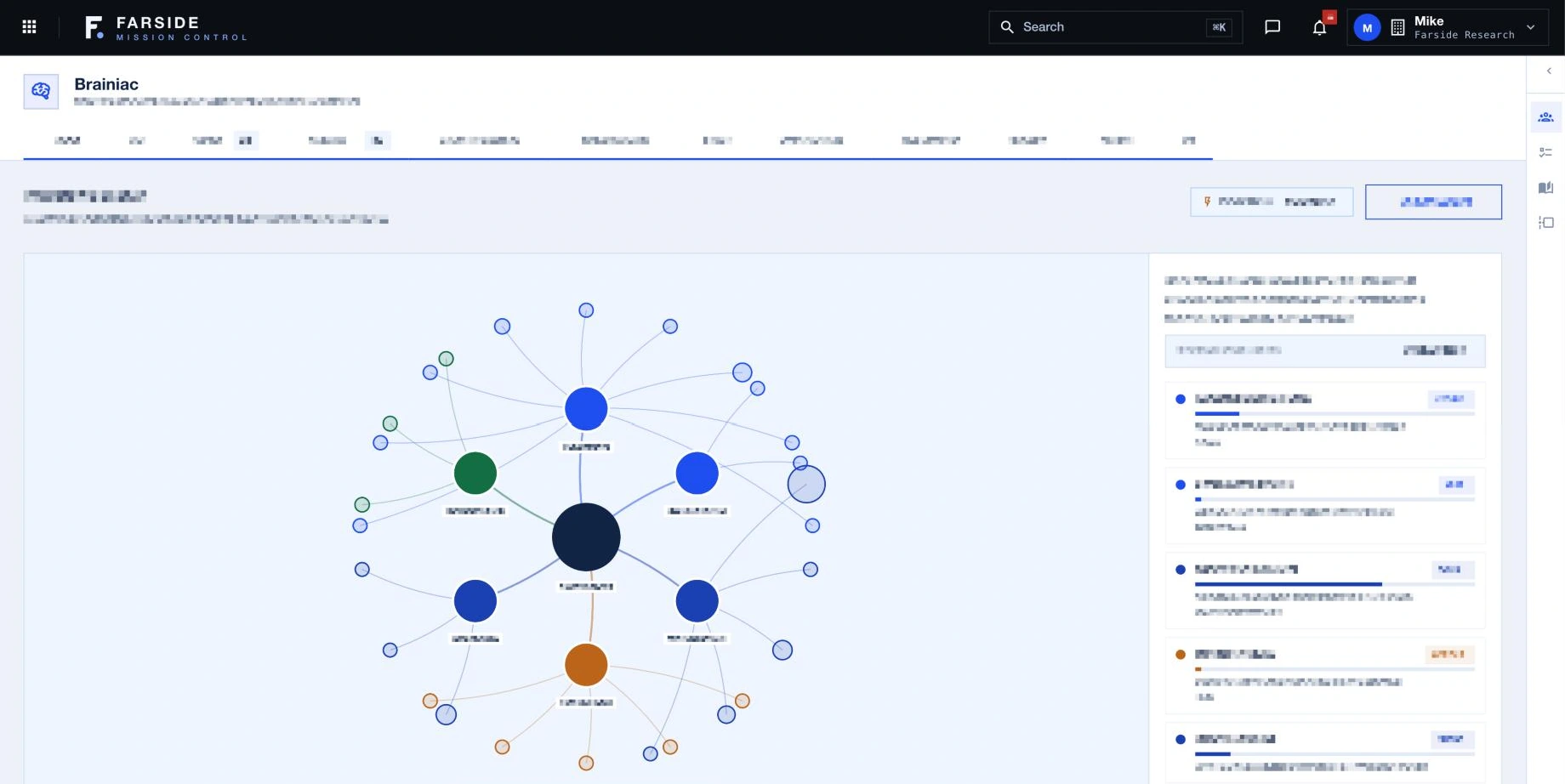
We call the shared memory Brainiac. When one team learns something about the business, the next task anywhere can use it. A complaint that keeps showing up in support finds its way to product. Keyword research turns into the content plan instead of a report nobody opens. If a competitor changes their prices, the executive who should care gets it in front of them.
Anybody who's worked at a real company knows how rare that is. The same question gets answered four times by four departments who've never met. In here there's one memory and no hallway politics.
#Who's actually in charge
I'm a control freak, so I promise I've thought about this more than you have.
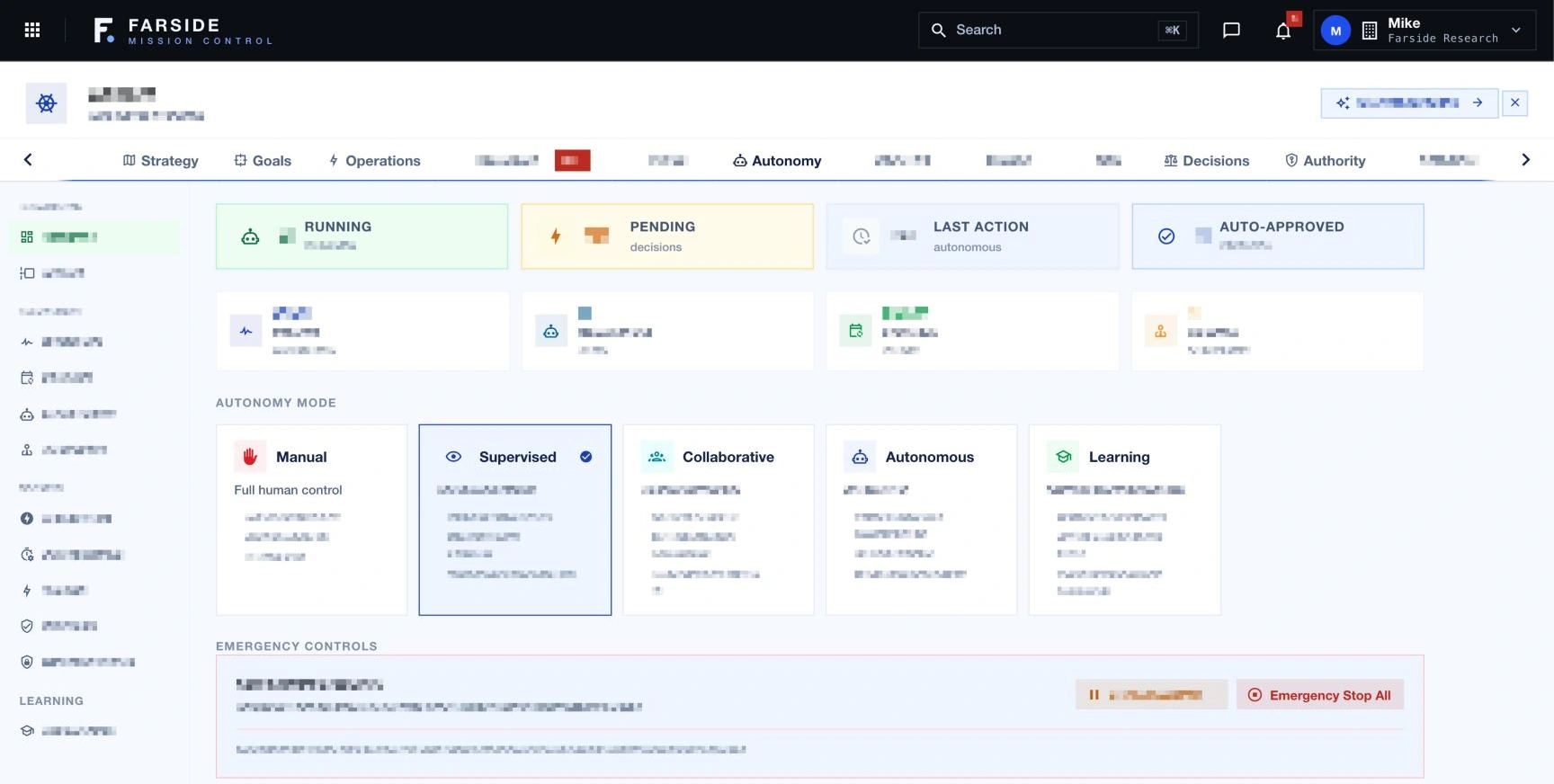
Trust works like a dial, and it's set per kind of work. Researching a competitor? Go nuts, I don't need to sign off on reading. Publishing something or emailing a person? Draft it and I'll look. Merging code, spending real money, changing the workforce itself? That waits for me, every time. People... employees earn more room by being right, and lose it by being wrong.
There's also one switch that stops everything. Every employee, every background job, all of it, at once. I'd recommend one to anybody.
Here's what I think gets lost when people talk about this stuff: an executive that argues with me isn't a system out of control. The COO can't fire me. I'm still the one at the helm. It saw a problem, brought it to the person responsible, and didn't let that person wriggle out of it. That's exactly what I'd want from a human in that job. Most humans would be too polite.
#Why I don't want it to be nice
I could ask for a softer COO. Be encouraging, acknowledge the founder's hard work, maybe open with a compliment.
No thanks. I run a company where nobody can tell me no, and that's dangerous. I start a lot of things. When you're a team of one, there's no one down the hall to ask why something's been sitting there, and you can always find a reason it's fine. I had several. They were good reasons! They were also excuses, and it's handy to have someone around who can smell the difference.
Was it technically wrong about this one? Yes, a service in development is allowed to be off. I'll still take that mistake over the opposite one. An executive that chases me for something that wasn't an emergency costs me some pride. One that shrugs at a real outage costs me customers.
There's a version of AI that tells you your idea is brilliant, all day, forever. You can get that anywhere. I'd rather have the one that asks why the thing isn't running.
#What I'm not showing you
Plenty, as you may have gathered from the pixels. How the teams are put together, how the work gets routed, what the executives look at when they decide something's wrong. Some of that is the secret sauce, and some of it is still held together with tape I'd rather you didn't see.
And it isn't magic. Work gets stuck. Things come back for rework more than I'd like. And, as we've established, it can get very worked up about a service that was never in production. I'm proving it on my own company first, because if it's going to make a mess, it should be my mess. When it's good enough to hand to other people, we plan to offer it as a service. No date yet. I'm not going to pick one just to have one.
There's more on the Mission Control page, including a day in the life. And if you want a piece you can use today, our deep research engine started life in there. It's called Farside.
As for leaving half-built services offline, I've learned my lesson.
Next time I'm hanging a sign on it. A big one.
Pass it on